 Gocta Waterfall Tours
Gocta and Kuelap: Planning Both in One Trip
Last reviewed August 2026
A Gocta and Kuelap tour is really two separate full days built around the same base town, Chachapoyas, not one combined outing. Gocta is a 5.5 km hike each way to the base of a 771 m waterfall; Kuelap is a pre-Inca stone citadel reached by cable car, on the far side of a river valley, and it deserves a day of its own. This page lays out why the two don't combine, what Kuelap's access looks like going into 2026, and two ready-made plans, three days and four, for fitting both into a single trip, alongside the region's other worthwhile stops. For the three bookable Gocta waterfall tours from Chachapoyas, see the homepage comparison.
Quick answer
Gocta and Kuelap cannot be combined into one day. Gocta is a half-day hike from Cocachimba to the base of the falls and back; Kuelap is a separate destination reached by cable car from Nuevo Tingo, on the opposite side of Chachapoyas, and needs its own full day. Most travellers who want both plan three nights in Chachapoyas at minimum, with a fourth night if they also want Karajía, Quiocta or Yumbilla.
Key takeaways
- Gocta and Kuelap are separate full days. There is no realistic way to see both in a single outing
- Kuelap's southern wall partially collapsed in 2022; the site closed for most of 2023, reopened in 2024, and restoration finished in 2026
- The cable car from Nuevo Tingo takes about 20 minutes and is closed every Monday for maintenance. Always confirm current tour details before you fly
- A three-day plan covers Gocta and Kuelap; a four-day plan adds Karajía and Quiocta, or a Yumbilla side trip
- Most visitors give the whole region three or four nights based in Chachapoyas
- See the height and disputed ranking of Gocta itself for the fact behind the name
Why These Two Are Separate Days
Every operator itinerary out of Chachapoyas treats Gocta and Kuelap as distinct products, and the geography explains why.
Different valleys, different transport
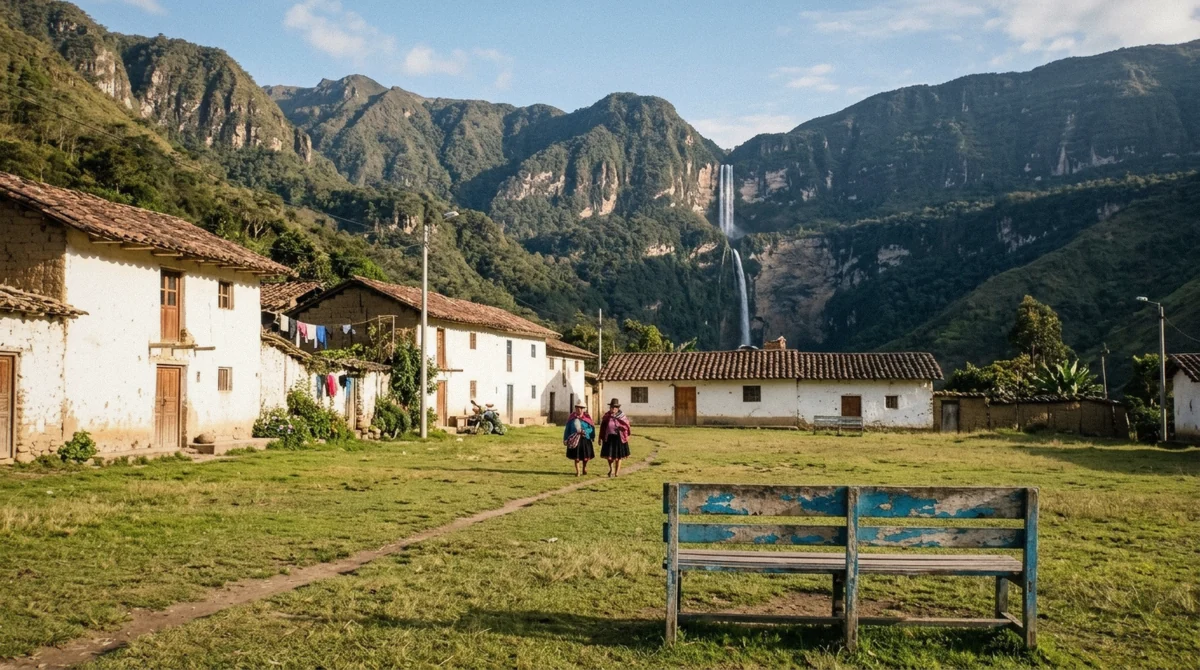
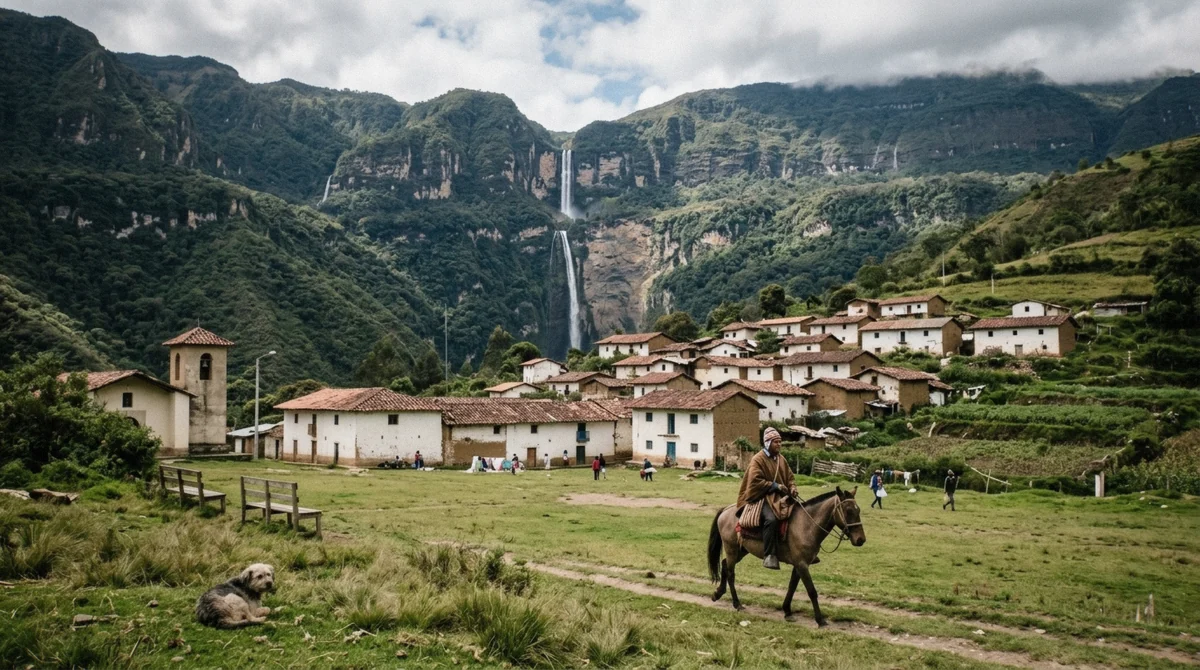
Gocta's trailhead is the village of Cocachimba, about 42 km from Chachapoyas by road, and the day itself is built around a 5.5 km walk each way to the base of the falls. Kuelap sits on a ridge above the Utcubamba river on the opposite side of the region, reached by driving to Nuevo Tingo and then riding a cable car up to the site. The two access roads do not connect in a way that lets a vehicle realistically serve both trailheads in one day; a driver would need to backtrack most of the route between them.
Because the two are separate full days, this page treats a Gocta and Kuelap trip as exactly that: two bookings, two mornings, planned back to back or with a rest day between them rather than folded into a single itinerary.
Both are physically demanding in their own way
Gocta's demand is walking: roughly 830 m of cumulative climbing over 10 to 11 km round trip, most of it on a clay surface. The full breakdown of that effort sits on the Gocta hike guide rather than here. Kuelap's demand is different: the cable car removes most of the climbing, but the site itself is large, walked slowly across uneven stone at altitude, and stacking the two back to back without a break is how travellers end up remembering the region as exhausting rather than worthwhile.
The honest sequencing recommendation, echoed by regional operators, is to give each its own day and, where the schedule allows, a rest morning in between.
Kuelap in 2026: Access, Cable Car, What Changed
Kuelap's access has genuinely changed in recent years, which is exactly why this section carries a date stamp rather than a fixed claim.
What Kuelap is
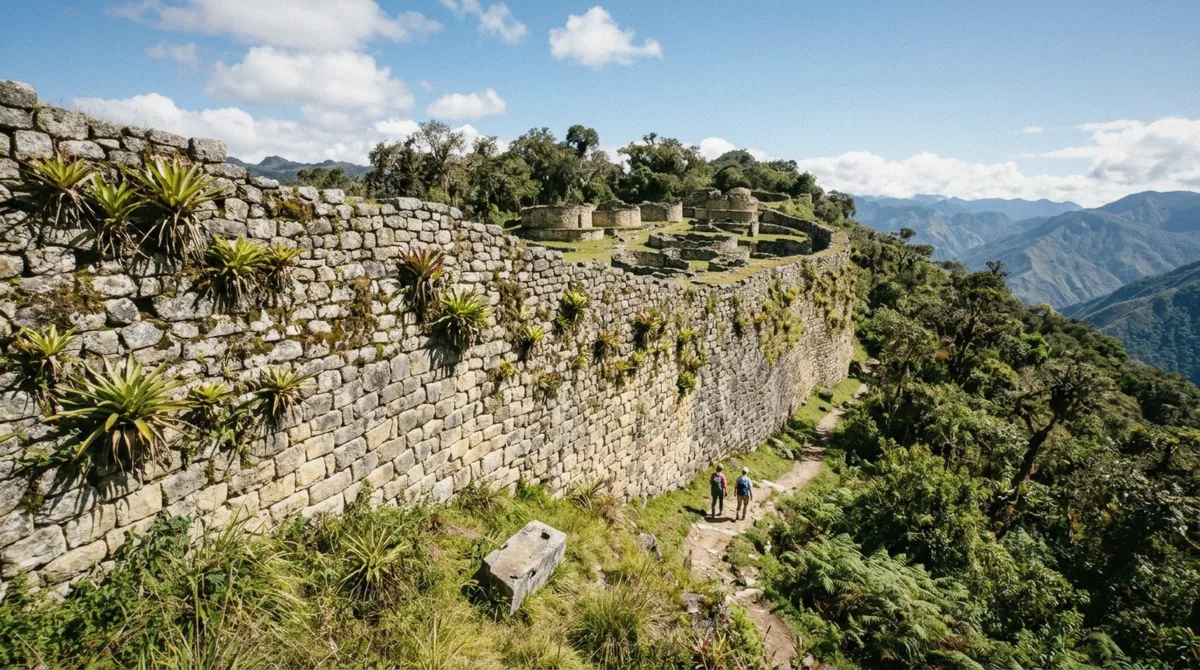
Kuelap is a pre-Inca stone citadel of circular houses built by the Chachapoya culture on a ridge above the Utcubamba valley, predating Machu Picchu by centuries. Its perimeter walls, in places taller than a person, enclose hundreds of round stone dwellings, and the site is one of the largest pre-Columbian structures anywhere in Peru by sheer volume of stonework.
The 2022 collapse and the years since
A section of Kuelap's southern wall collapsed in 2022, and the site closed to visitors for most of 2023 while engineers assessed the structure and began repairs. It reopened in 2024 on a limited basis, and restoration work continued through the following two years, with the project reported complete in 2026. None of this changes what makes Kuelap worth the day; it does mean a visitor planning a 2026 trip should treat any access detail here as current at time of writing and worth a final check before departure, exactly as the live availability on this site's tours is checked before booking.
The cable car
The cable car from Nuevo Tingo up to the citadel takes about 20 minutes each way and runs Tuesday to Sunday, roughly 8:00 am to 5:00 pm. It is closed every Monday for routine maintenance, and it was also closed 4 to 25 May 2026 for its annual maintenance window, a useful reminder that the cable car, not just the archaeological site, has its own separate schedule that can take a whole week out of a plan. Anyone building a Kuelap day around a specific date should confirm the cable car is running before locking in flights into Jaén or Chachapoyas.
A Three-Day Plan: Gocta and Kuelap Only
The minimum shape for seeing both, with one buffer day built in for travel.
-
Day 1
Arrive in Chachapoyas
Fly Lima to Jaén, then transfer by road, or arrive overland. Settle in and rest: this day is travel, not sightseeing.
-
Day 2
Gocta waterfall
Full day from Chachapoyas to Cocachimba and the base of the lower tier, choosing from the three bookable tours compared on the homepage.
-
Day 3
Kuelap citadel
Full day to Nuevo Tingo, cable car up to the site, guided walk through the stone houses, cable car back down.
A Four-Day Plan: Gocta, Kuelap and One More Day
Adds either the Karajía and Quiocta pairing or a Yumbilla side trip, depending on whether ruins or waterfalls interest you more.
-
Day 1
Arrive in Chachapoyas
Same as the three-day plan: a travel day, not a sightseeing day.
-
Day 2
Gocta waterfall
The same full day described above, walking to the base of the 771 m fall.
-
Day 3
Kuelap citadel
Cable car up from Nuevo Tingo and a guided walk through the stone houses.
-
Day 4
Karajía and Quiocta, or Yumbilla
Either the sarcophagi and caves, usually sold as one combined day, or a longer day trip out to Yumbilla falls, roughly two hours from town.
Day-by-Day, Side by Side
The same two plans laid out as a single table for comparison.
Choosing between them
The three-day plan is the minimum that actually works without rushing either site. Attempting Gocta and Kuelap in fewer than three full days from Chachapoyas means cutting one of them short. The fourth day is worth adding if Karajía's sarcophagi, the Quiocta caves or Yumbilla's greater height genuinely interest you; if they don't, three days and a relaxed rest morning is a complete trip on its own.
| Day | Three-day plan | Four-day plan |
|---|---|---|
| 1 | Arrive, settle in Chachapoyas | Arrive, settle in Chachapoyas |
| 2 | Gocta waterfall, full day | Gocta waterfall, full day |
| 3 | Kuelap citadel, full day | Kuelap citadel, full day |
| 4 | Depart, or a free morning | Karajía and Quiocta, or Yumbilla |
Getting Between the Two
Neither day needs the visitor to arrange their own transport between sites, since the day trips are separate bookings that both start and end in Chachapoyas.
The practical shape of it
Both the Gocta day and the Kuelap day are round trips from Chachapoyas: a vehicle collects you in town in the morning and returns you to town in the late afternoon or early evening. There is no need to relocate lodging between the two days, and no direct road link between Cocachimba and Nuevo Tingo that a plan should try to use; each day simply starts fresh from the same base.
Broader questions about flying into the region, the road transfer from Jaén, and how the airport connections work belong on the how to get to Gocta waterfall page rather than here; this page assumes you are already based in Chachapoyas and choosing how to spend the days once you are there.
Why booking them separately works better
Because Gocta and Kuelap are sold by different operators as separate products, there is no single combined ticket to hunt for, and that turns out to be an advantage rather than a gap. A traveller can lock in the Gocta day first, watch the weather forecast, and only confirm the Kuelap date once the first day is behind them, useful given how much a wet-season downpour can change either walk. Free cancellation up to 24 hours before departure applies to the Gocta listings compared on this site's homepage, which gives exactly that flexibility without any financial risk in booking early.
The one sequencing choice worth making deliberately is which day goes first. Some travellers put Kuelap first, on the reasoning that the cable car is less physically demanding than the Gocta hike, and save the longer walking day for once they have settled into the altitude and pace of the region. Others prefer to get the harder day out of the way early, while energy is highest. Neither order changes what either day delivers; it is a question of pacing, not logistics.
What Else Fits: Karajía, Quiocta, Yumbilla, Sonche
Chachapoyas has more than two sights, and several of them pair naturally into a spare day without competing for the same energy as Gocta or Kuelap.
The other regional stops
Karajía is a cliff niche holding painted clay sarcophagi, standing figures that once held Chachapoya mummies, and it is usually paired with the nearby Quiocta caves in a single combined day; the two sit close enough together that operators sell them as one trip rather than splitting the drive across two visits. The Sonche canyon is closer still, a half-day trip that fits easily around a travel day without displacing either Gocta or Kuelap. Yumbilla falls, measured at about 896 m and genuinely taller than Gocta, sits roughly two hours from Chachapoyas and receives a fraction of the visitors.
For the full height comparison between the two waterfalls, see how tall Gocta actually is.
| Stop | Usually paired with | Time needed |
|---|---|---|
| Karajía sarcophagi | Quiocta caves | One full day, combined |
| Quiocta caves | Karajía sarcophagi | One full day, combined |
| Sonche canyon | A free morning or afternoon | Half day |
| Yumbilla falls | Its own day, not combined | Full day, about 2 hours each way by road |
How Many Nights the Region Needs
The honest total, once Gocta and Kuelap are both accounted for.
Three or four, in practice
Most visitors give the Chachapoyas region three or four nights: one for arrival and settling in, one each for Gocta and Kuelap, and a fourth if a third full-day excursion (Karajía and Quiocta, or Yumbilla) is on the list. Fewer than three nights means choosing between Gocta and Kuelap rather than seeing both properly, and more than four nights starts to outpace what the region's day-trip menu can fill without repetition.
Where to stay for that stretch, and whether basing in Chachapoyas itself beats a night in Cocachimba near the trailhead, is covered on the where to stay near Gocta page.
None of this needs to be booked as one package. The Gocta waterfall tours and the Kuelap day are sold separately by different operators, and building the trip as two or three individual bookings around a fixed base in Chachapoyas is both the simplest and the most flexible way to do it.
Gocta and Kuelap: Questions Travellers Ask
Can you visit Gocta and Kuelap in one day?
No. Gocta's trailhead is Cocachimba and Kuelap is reached by cable car from Nuevo Tingo, on the opposite side of the region, and each is a full day on its own. Plan them as separate days, not a combined itinerary.
How many days do you need in Chachapoyas?
Most visitors give the region three or four nights: one for arrival, one each for Gocta and Kuelap, and a fourth for Karajía, Quiocta or Yumbilla if those interest you.
Is the Kuelap cable car open?
It runs Tuesday to Sunday, roughly 8:00 am to 5:00 pm, and is closed every Monday for maintenance. It was also closed 4 to 25 May 2026 for its annual maintenance window, so always confirm current dates before you fly in.
What else is there to see near Gocta?
Karajía's sarcophagi paired with the Quiocta caves as one day, the Sonche canyon as a half day close to Chachapoyas, and Yumbilla falls, taller than Gocta at about 896 m, roughly two hours away.
How far is Kuelap from Chachapoyas?
The drive to Nuevo Tingo, where the cable car starts, takes a couple of hours from Chachapoyas by road, and the cable car itself is about 20 minutes each way up to the citadel.
Should I do Gocta or Kuelap first?
Either order works. Some travellers prefer Kuelap first because the cable car is less physically demanding than the Gocta hike, saving the longer walking day for once they have adjusted to the region.
Is Kuelap still damaged from the 2022 wall collapse?
The site closed for most of 2023 after a section of its southern wall collapsed, reopened in 2024, and restoration work was reported complete in 2026. Confirm current access status before finalizing a Kuelap day.