 Gocta Waterfall Tours
What to Pack for the Gocta Waterfall Hike
Last reviewed August 2026
Working out what to pack for Gocta waterfall is short work once you know what the operators supply and what the trail itself demands. Every one of the guided Gocta waterfall tours covers hotel pickup, transport and the entrance ticket, so the packing question comes down to your feet, the weather and how much cash you are carrying, because nothing at the trailhead takes a card.
Quick answer
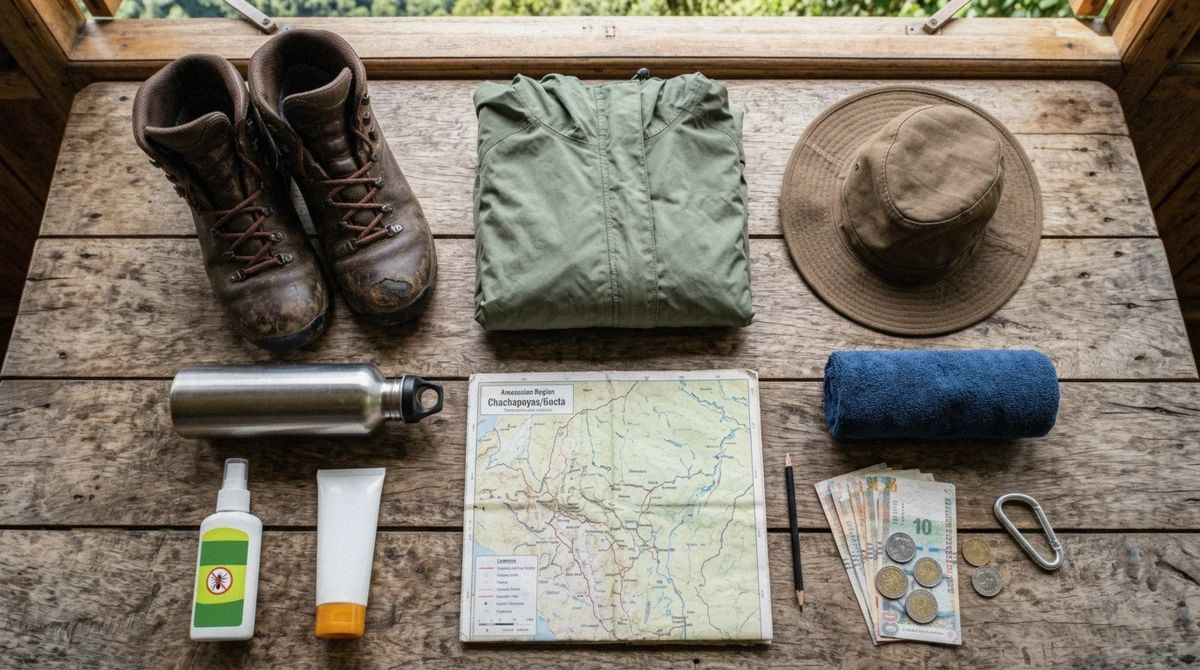
For a Gocta waterfall hike, pack boots with real tread, a waterproof jacket or poncho for every month of the year, insect repellent, sunscreen, at least 1.5 litres of water, and S/ 30 to S/ 80 in small cash notes for the ticket, a horse and lunch if it is not included on your tour. Everything else on the operators' own lists is secondary to those five items.
Key takeaways
- Boots come first. The trail is clay and stays greasy in the shade even in the driest months
- A rain jacket belongs in the bag every single month, not just the wet season
- Nothing at the trailhead takes cards. Carry S/ 30 to S/ 80 in small notes depending on your tour
- Lunch comes after the hike, not before it. Bring at least 1.5 litres of water and a snack
- December to March adds mud underfoot; June to September is drier but hotter in the open sections. See the full season breakdown
- The $44 trip and the bilingual-guide trip both include lunch, which changes how much cash you actually need
The Short List, in Order of Importance
If you pack nothing else, pack these. Ranked by how much each one actually changes your day on the trail.
The checklist
Every item here earns its place because operators, trail reports or the climate itself flag it as a genuine issue, not a generic packing-blog habit.
- Hiking boots with real tread: trainers have almost no grip on wet clay
- Waterproof jacket or poncho: needed in every month, not only the wet season
- Cash in small soles notes, S/ 30 to S/ 80: nothing at the trailhead takes cards
- At least 1.5 litres of water: the village shops sit at the start and end of the trail only
- Insect repellent: the open cane-field sections at the start attract insects
- Sunscreen: the same open sections have no forest cover
- Hat with a secured strap: wind picks up at the exposed viewpoints
- Towel and a dry change of shirt: the spray at the base soaks you even if you do not swim
- A snack: lunch comes after the hike, not before it
- A phone or camera you are willing to have get wet: dry bags help but the spray finds a way in
Footwear, and Why Trainers Fail Here
What actually works on this trail
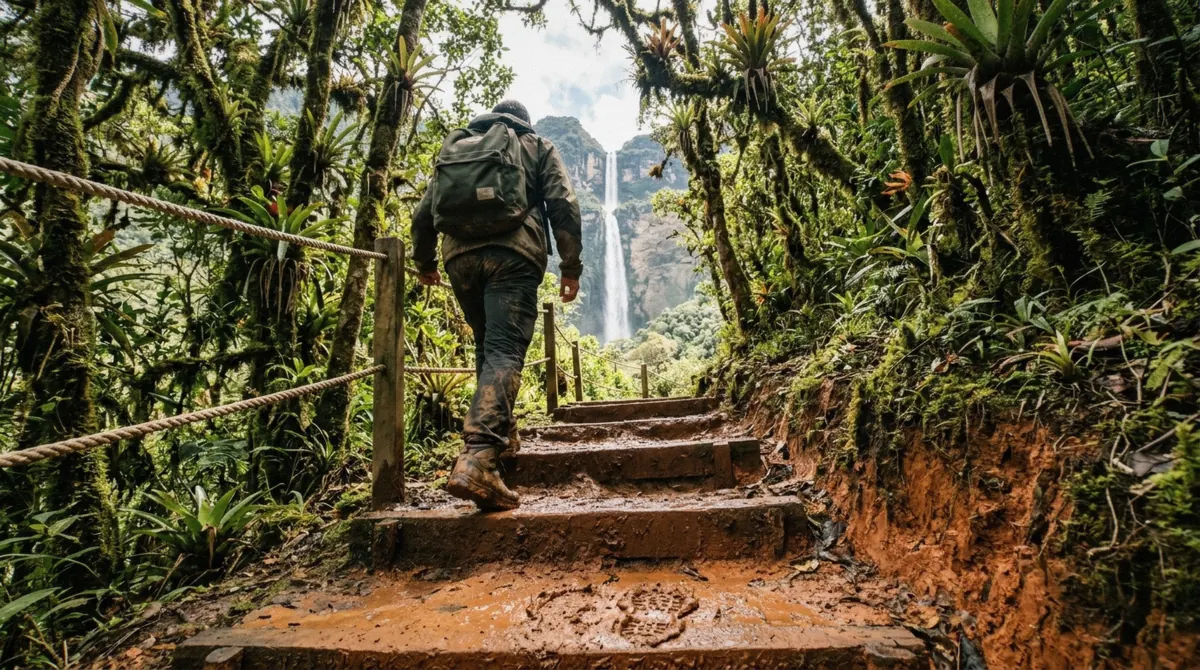
The Gocta trail surface is clay for nearly its full length, and clay is a different problem from the packed dirt most casual sneakers handle fine. In the December to March rains the clay turns to a genuine slick; even in the driest months the shaded sections under the cloud-forest canopy stay damp long after the last rain, because the tree cover blocks the sun that would otherwise dry them out.
Boots with real, deep tread are the single most useful item on this list. They matter more than a rain jacket, more than anything else, because footing rather than weather is what actually decides how hard the hike feels underfoot.
Break boots in before the trip if they are new. A blister that starts on the outbound leg only gets worse across the return climb out of every gully, and there is no shortcut back to Cocachimba once you are committed to the trail. Ankle support matters as much as the sole: the boulder crossing at the base and the timber footbridges over the gullies both reward a boot that holds the ankle steady on an uneven step, rather than a low-cut shoe that lets the foot roll sideways.
If you are travelling light and considering renting boots locally in Chachapoyas, check the fit carefully before committing to the day. A boot that rubs after an hour is worse than a well-worn trainer for a hike that runs four to six hours in total, and there is no gear shop along the route to swap them out partway through.
| Footwear | OK for this hike? | Why |
|---|---|---|
| Hiking boots, real tread | Yes, the standard recommendation | Grips wet clay and supports ankles on uneven ground |
| Trail running shoes | Workable in dry months, risky in wet ones | Less grip than boots on genuinely slick clay |
| Trainers or sneakers | Not recommended | Little to no tread depth for wet clay |
| Sandals or flip-flops | No | No grip, no ankle support, unsafe on boulder crossings |
| Rubber boots (village-hired) | Sometimes available locally | Waterproof but heavy over 10 to 11 km |
Rain Gear in Every Month
Not just a wet-season item
A waterproof jacket or poncho belongs in the pack in every month, whatever the season charts say. The operators' own packing lists say the same thing, and the reason is straightforward: cloud forest makes its own weather. Even a month averaging a modest amount of rain overall still hands you afternoons that empty on you with no real warning, and there is nowhere to shelter for long stretches of the trail.
A poncho that covers your day pack as well as yourself is the more practical choice over a short jacket, since it also keeps whatever you are carrying dry through a sudden downpour. Pack it near the top of your bag rather than buried at the bottom, because by the time you need it you generally need it fast.
Underneath the waterproof layer, quick-dry synthetic clothing does more work than most travellers expect. The combination of hiking exertion, humid air and the occasional shower means you are likely to be damp with sweat well before any rain reaches you, and a synthetic base layer dries against the skin far faster than cotton ever will once the group stops moving at a viewpoint. A light long-sleeved layer also covers the sun-exposure gap that sunscreen alone leaves in the open cane-field sections, where there is no forest canopy to soften the midday light.
A dry bag for spare layers, rather than just a plastic liner, is worth the small extra weight if you own one. The stream crossings on timber and rope bridges are not usually a soaking risk in themselves, but a slip on wet clay near one of them is exactly the kind of moment that puts a bag briefly in the mud or the water.
How Much Cash to Carry, and in What Notes
Small notes, and more than you'd guess
Nothing at the trailhead takes cards. Not the ticket office, not the horse handlers, not the lunch stalls in Cocachimba. Carry S/ 30 to S/ 80 in small notes, and the exact figure depends heavily on which tour you booked: the entrance ticket runs about S/ 10 to S/ 20 depending on whether you take one fall or the circuit, a horse if you want one is about S/ 40, and lunch where it is not included runs S/ 25 to S/ 35.
Small notes matter as much as the total amount. Village stalls and ticket offices in a place this remote rarely carry change for a large bill, so break larger notes in Chachapoyas before you leave rather than trying to pay for a S/ 10 ticket with something the office cannot break.
Budget a little beyond the minimum, too. A cold drink at the village shop after the hike, a tip for a horse handler if you use one, or a second helping at the lunch stop are all small, ordinary expenses that a tight cash budget does not leave room for. Carrying S/ 80 rather than S/ 30 costs nothing extra to plan for and removes one more thing to think about on a day that already asks a lot of your legs.
A separate small pouch for the day's cash, kept apart from your main wallet or passport, is a sensible habit here as it is on any hike. You will be handling notes at the ticket office, possibly again for a horse, and again at the lunch stop, so quick access matters more than on a day where you pay once and are done.
Wet Season vs Dry Season Packing
The core list barely changes, but the emphasis does.
What shifts between the two
December to March adds mud underfoot and low cloud that can sit in the valley for hours, which shifts the priority toward footwear and rain gear. June to September is drier underfoot but noticeably hotter in the open cane-field sections at the start and end of the trail, which shifts the priority toward sun protection and water. Full month-by-month conditions, including rainfall figures, live on the best time to visit page.
| Item | December to March (wet) | June to September (dry) |
|---|---|---|
| Footwear | Boots essential, expect genuine mud | Boots still recommended, shaded sections stay damp |
| Rain layer | Pack it, use it often | Pack it anyway, cloud forest still surprises |
| Sun protection | Useful between showers | Priority. Open sections get hot and exposed |
| Water | 1.5 litres, cooler conditions | 1.5 litres minimum, heat increases needs |
| Insect repellent | Useful, humidity is high | Useful, especially at the trailhead |
| Trekking poles | Genuinely help on slick clay | Optional, terrain is firmer |
What the Operators Themselves Tell You to Bring
Straight from the listings
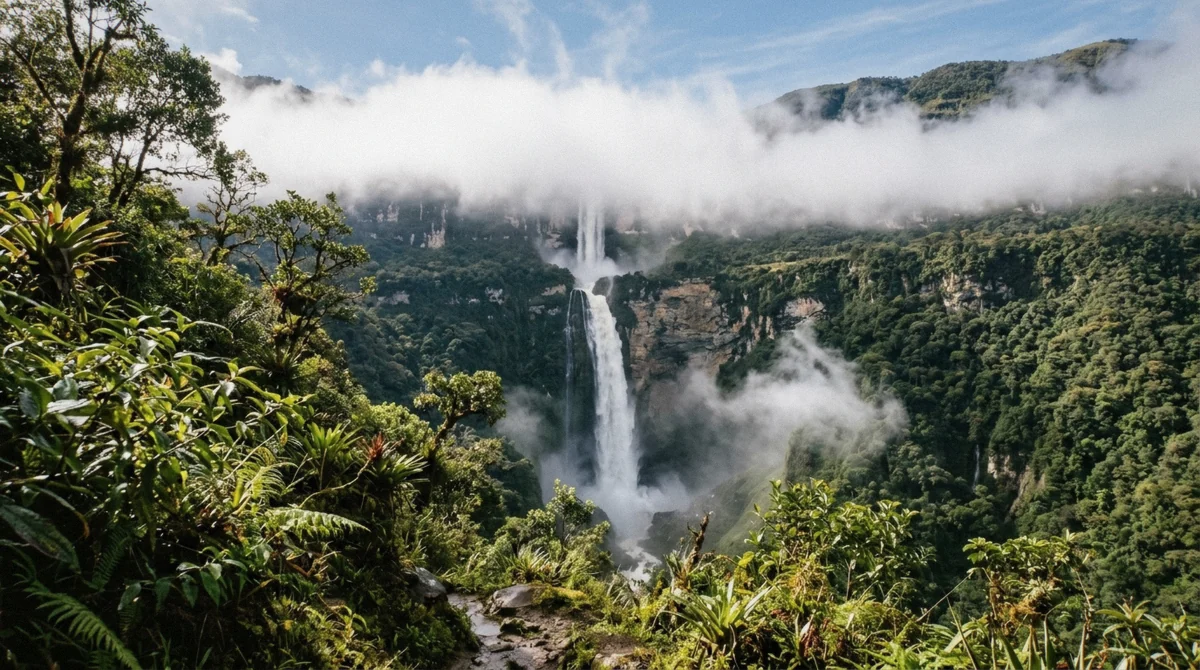
Operator packing notes for this hike are consistent across all three tours: a hat, a towel, sunscreen, insect repellent and comfortable clothing. Two of the three listings state explicitly that alcohol and drugs are banned on the trip, which is a reasonable operator rule for a hike involving stream crossings on timber and rope bridges. The seven-hour tour from LIMA INCA TRIPS includes a first-aid kit in its own inclusions, which is worth knowing before you decide how much of your own kit to duplicate.
The towel is worth taking seriously rather than skipping. The spray at the base soaks everything within range even if you have no plan to swim, so a dry shirt and a bag your phone or camera can actually survive in are worth the small extra weight.
What to Leave Behind
Skip these
A few things genuinely are not worth the weight or the risk on this specific hike, whatever a general packing list might suggest.
- Cotton clothing: it stays wet for hours once soaked, unlike quick-dry synthetics
- Jewellery or anything valuable you would hate to lose crossing a stream on a timber bridge
- Large bills: the village cannot break them, carry small notes instead
- Heavy camera gear with no protection: the spray at the base reaches further than expected
- A second full change of clothes: one dry shirt covers the spray, more is dead weight over 10 to 11 km
Pack light rather than thoroughly. Everything on the short checklist above fits easily in a day pack, and the difference between a well-prepared hiker and an overpacked one shows up most on the return leg, when every extra kilogram is carried back up out of every gully the trail dropped into on the way in.
Packing for Gocta: Questions Travellers Ask
Can I wear jeans on the Gocta hike?
No, not recommended. Jeans are cotton, so once wet from rain, spray or a stream crossing they stay wet for hours, chafe against skin, and restrict movement on the steeper gully sections. Quick-dry synthetic trousers are the better choice.
Can I wear shorts for the hike?
Yes, with a caveat. Quick-dry shorts work fine for most of the trail, though some hikers prefer full-length quick-dry trousers for the insect exposure in the cane-field sections and the boulder crossing near the base.
Do I need a rain jacket at Gocta even in the dry months?
Yes. Cloud forest makes its own weather regardless of the season chart, and even a relatively dry month still delivers afternoon downpours with little warning. Pack a waterproof layer whichever month you visit.
How much cash should I take to Gocta waterfall?
S/ 30 to S/ 80 in small notes, depending on your tour. Budget for the entrance ticket if it is not covered, a horse at about S/ 40 if you want one, and lunch at S/ 25 to S/ 35 on tours that do not include it.
Do I need a swimsuit for Gocta?
Pack one if you might want to get in the pool at the base, though it is entirely optional. The water is cold and the current from the spray is strong, so many visitors are content to watch rather than swim.
Will my phone survive the spray at the base?
Only if it is protected. The spray off the lower tier reaches well beyond where you would expect, soaking anything unprotected within range. A dry bag or a genuinely waterproof case is worth the small extra weight.
Is there anywhere to buy forgotten gear near the trailhead?
Very little. Cocachimba has small shops at the start and end of the trail selling drinks and basic snacks, but not hiking gear. Sort your packing list in Chachapoyas before you leave.